High-Reliability Electrical Connections for Space Applications
Abstract:
Glass-sealed connectors play a critical role in ensuring hermetic electrical connections in space systems where vacuum, radiation, and thermal cycling pose severe challenges. This paper presents the outgassing and radiation resistance characteristics of Sunkye’s glass-sealed connectors, highlighting key materials, design considerations, and test validation results that ensure reliability for satellite and deep-space missions.
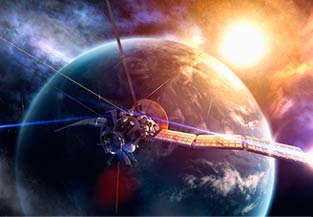
In space applications, electrical connectors must ensure reliable signal transmission under extreme environmental conditions. Glass-sealed connectors are widely used in satellites, probes, and deep-space missions due to their excellent mechanical sealing, thermal stability, and electrical insulation. Space environments impose stringent demands, including vacuum, high-energy radiation, and thermal cycling. Key factors affecting performance are Outgassing and Radiation Resistance. This paper presents an overview of these factors while highlighting potential limitations, design considerations, and verification approaches.
1. Overview of Glass-Sealed Connectors
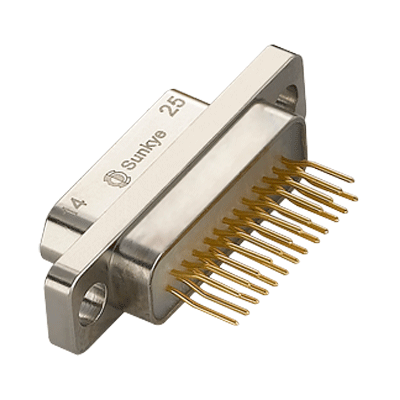
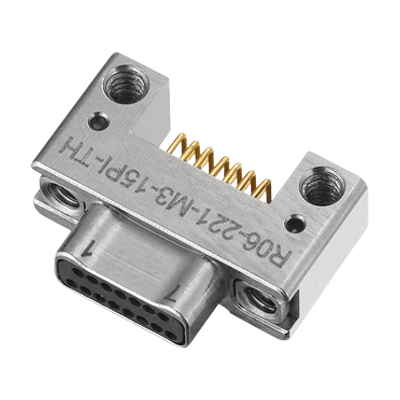
Glass-sealed connectors typically consist of:
· Metal shell: Stainless steel, Kovar, Inconel, or BeCu, providing mechanical strength and thermal expansion matching.
· Glass insulator: Low-outgassing borosilicate or ceramic glass with high dielectric strength and thermal expansion compatibility.
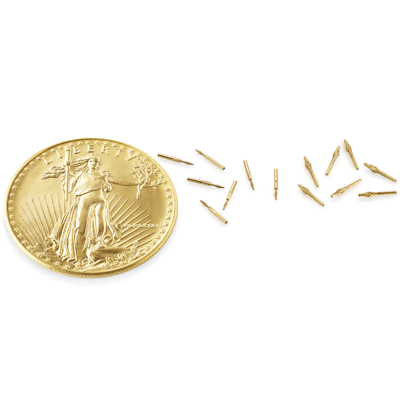
· Contacts: Copper alloys or gold-plated materials for high-reliability electrical connection.
Matching the thermal expansion between glass and metal is critical for maintaining hermetic sealing under vacuum, thermal cycling, and radiation environments.
2. Outgassing
2.1 Definition and Space Requirements
Outgassing refers to the release of volatile materials in a vacuum, which may cause:
· Increased contact resistance due to deposition on contact surfaces
· Thin-film formation on optical elements or sensors
· Pressure fluctuations in vacuum environments
Reference Standard: NASA-STD‑6016 and ECSS-Q-ST-70-02:
· Total Mass Loss (TML) ≤ 1.0%
· Collected Volatile Condensable Material (CVCM) ≤ 0.1%
2.2 Advantages and Limitations of Sunkye‘s Glass-Sealed Connectors
Advantages:
· Glass insulators inherently exhibit low outgassing
· Hermetic seals maintain integrity after thermal cycling
Limitations:
· Auxiliary materials (weld metals, sealants, fillers, lubricants) can contribute to outgassing
· High-temperature vacuum bake-out may be required for the full assembly
2.3 Material Selection and Process Optimization
· Use low-outgassing glasses
· Minimize organic fillers, lubricants, or sealants
· Optimize sealing and annealing processes to avoid micro-voids at the glass-metal interface
3. Radiation Resistance
3.1 Space Radiation Environment
Spacecraft may be exposed to:
· Cosmic rays: High-energy protons, electrons, and heavy ions
· Solar radiation: UV and high-energy particles
· Earth’s radiation belts: High-energy electrons
Potential effects include:
· Color center formation in glass, reducing dielectric performance
· Oxidation or embrittlement of organic fillers
· Surface oxidation or migration of metal contacts
3.2 Advantages of Glass-Sealed Connectors
· Glass insulators resist UV and some high-energy particles better than organic materials
· Inorganic seals avoid radiation-induced degradation common in plastics
· Gold-plated or corrosion-resistant metal contacts reduce oxidation and migration risks
3.3 Design and Verification Considerations
· Select glass and metal combinations based on mission radiation dose (LEO vs. deep space)
· Conduct radiation testing for protons and electrons, including color-center assessment
· Coupled thermal cycling and radiation testing to validate long-term hermetic integrity
· High-dose missions may require specialized glass or shielding
4. Integrated Considerations of Outgassing and Radiation Resistance
· Volatile materials may deposit thin films under radiation, affecting electronics or optical components, but glass itself contributes minimally
· Design should focus on:
৹ Hermetic interface reliability
৹ Radiation-resistant contact plating
৹ Thermal expansion matching to prevent micro-cracks and micro-leaks
5. Compliance Parameter Table
Parameter | MIL-DTL-24308 Requirement | ESCC 3401 Requirement | Sunkye’s Glass-Sealed Connector Values |
Hermeticity | Leak rate ≤ 1×10⁻⁹ atm·cc/s He | Leak rate ≤ 1×10⁻⁹ atm·cc/s He | 1×10⁻⁹ atm·cc/s He |
Dielectric Withstand Voltage | 500 VDC min | 500 VDC min | 800 VDC |
Insulation Resistance | ≥ 5000 MΩ | ≥ 5000 MΩ | > 5000 MΩ |
Contact Resistance | ≤ 10 mΩ | ≤ 10 mΩ | 8~10mΩ |
Operating Temperature | -55°C to +125°C | -55°C to +125°C | -55°C to +125°C |
Thermal Cycling | 10 cycles (-55°C +125°C) | 10 cycles | Pass |
Vibration | 50 g, 11 ms | Equivalent | Pass |
Outgassing (TML / CVCM) | N/A | TML ≤ 1%, CVCM ≤ 0.1% | TML 0.1%, CVCM 0.02% |
Radiation Resistance | N/A | Qualification dose as per mission | up to 10⁶ rad(Si) |
6. Conclusion
Sunkye’s glass-sealed connectors demonstrate superior low outgassing and radiation-resistant performance, meeting the stringent requirements of most LEO, GEO, and interplanetary missions. For extreme deep-space or long-duration exposure, customized material selection and system-level validation are recommended. Future developments will focus on lightweight, multi-environment, and extended-lifetime hermetic interconnect solutions for next-generation spacecraft.

 English
  日本語
日本語  한국어
한국어  français
  Deutsch
  Español
  italiano
  русский
  Türkçe
  Svenska
  Nederland
  فارسی
فارسی فارسی
فارسی