From Hermetic Feedthroughs to High-Density Nano Interconnects in Implantable Systems
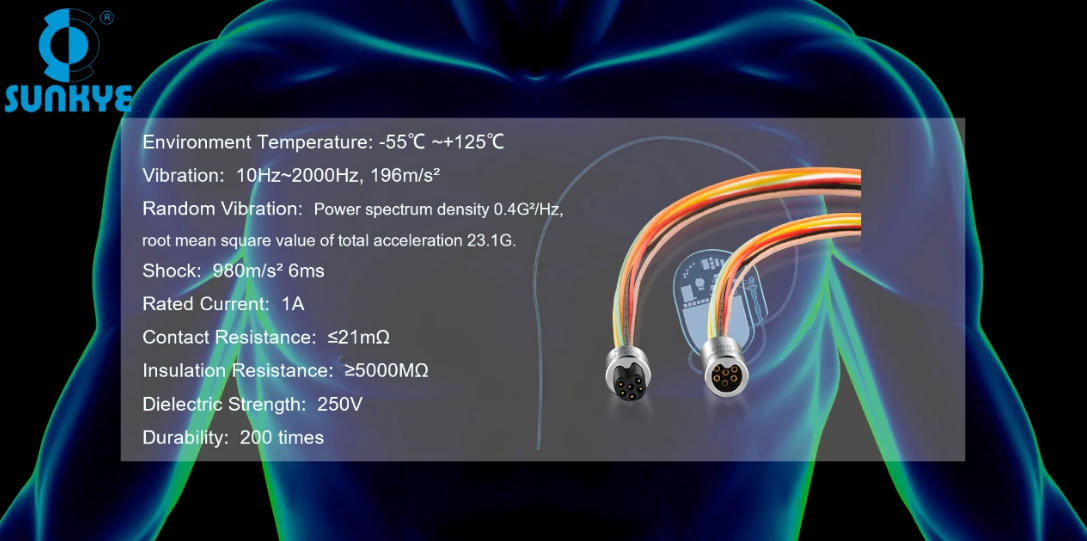
Implantable medical devices, such as neurostimulators and VNS (Vagus Nerve Stimulation) systems, require highly reliable electrical interconnections capable of operating inside the human body for extended periods—often exceeding 5 to 10 years. Unlike conventional industrial applications, interconnect design in these systems is not solely about signal transmission, but about maintaining a stable electrical interface across a biological barrier. This introduces critical requirements including hermetic sealing, biocompatibility, and long-term electrochemical stability.
A typical implantable interconnect architecture consists of three elements: an external pluggable connector for programming and interfacing, a hermetic feedthrough that isolates internal electronics from body fluids, and fixed internal connections designed to minimize mechanical and electrical failure points.
Designing such interconnect systems involves balancing several competing factors. Increasing channel density must not compromise hermetic integrity, while material selection—commonly titanium, platinum-iridium (PtIr), ceramics, or glass—must ensure long-term stability in physiological environments. At the same time, minimizing the number of physical connection interfaces is essential, as each interface represents a potential failure risk over long-term implantation.
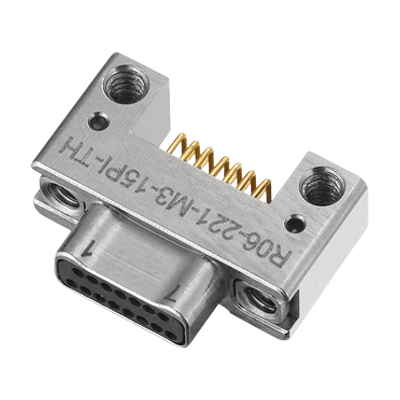
Different interconnect technologies fulfill distinct roles within this architecture. Hermetic feedthroughs provide long-term implant reliability but require complex manufacturing processes. Welded or fixed connections offer high stability but lack serviceability. High-density nano and micro connectors, originally developed for aerospace and defense applications, deliver excellent miniaturization and electrical performance, yet are typically limited to non-hermetic or external interfaces.
Sunkye, building on its expertise in high-density nano interconnect design, supports the development of customized solutions that can be integrated into hermetic packaging systems. This includes optimized contact layouts, flexible material selection, and precision mechanical design compatible with feedthrough-based architectures.
Through this approach, Sunkye enables the transition from discrete connector components to system-level interconnect solutions tailored for next-generation medical devices.
With the advancement of neuromodulation technologies, including VNS and deep brain stimulation (DBS), interconnect systems are evolving toward higher channel density, increased miniaturization, and improved long-term reliability. Addressing these demands requires a holistic design approach that integrates materials, structure, and system architecture into a unified solution. Sunkye provides a comprehensive solution to meet these evolving challenges, enabling reliable, high-density interconnect architectures for next-generation implantable medical devices.

 English
  日本語
日本語  한국어
한국어  français
  Deutsch
  Español
  italiano
  русский
  Türkçe
  Svenska
  Nederland
  فارسی
فارسی فارسی
فارسی