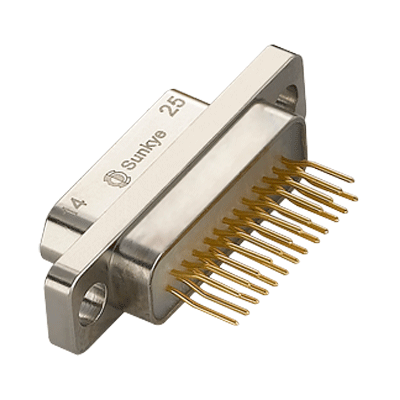
MIL-DTL-83513 Micro D Connectors
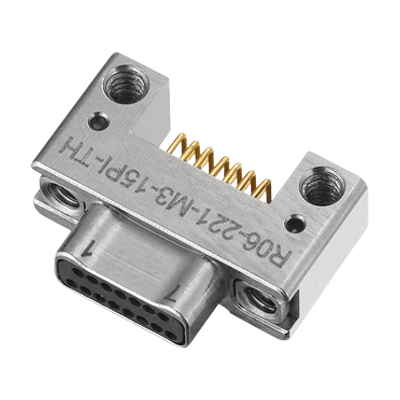
MIL-DTL-32139 Nano D Connectors
Discover more applications using Sunkye Connectors' solutions
The connector, also called connector assembly, is the main connecting device. Its main structure (or composition) and the corresponding materials are as follows:
the conductive terminal (contact)
the housing
the shell (depending on species)
other hardware.
1. The housing, also known as the base or insert, is used to arrange the contacts according to the required position and spacing and to ensure the insulation property between the contacts and between the contact and the shell. Good insulation resistance, voltage resistance and machinability are the basic requirements for selecting insulating materials to be processed into insulators. The materials used are generally engineering plastics. Connectors vary greatly in size, shape and purpose, so the engineering plastics used will be different; when designing connectors, factors such as temperature-resistance, fluidity, mechanical strength, electrical performance and cost should be considered in the selection of appropriate engineering plastics. The commonly used engineering plastics are LCP, NYLON46, PBT, PPS, PCT, etc.
2. The conductive terminal also refers to the contact, which is the core part for the connector to complete the electrical connection function. Generally, the contact pairs are composed of male contacts (plug, pin and male head) and female contact (socket and female head), and the electric connection is completed through the insertion of female and male contacts.
The male contacts are rigid parts, and their shapes are generally cylindrical (circular pin), rectangular columnar (square pin) or flat (illustration). The female contact is the jack, which is the key part of the contact pairs. It relies on the elastic force, which is generated from elastic deformation when the elastic structure is inserted with the pin, to form close contact with the male contact to complete the connection. There are many kinds of socket structures, such as cylinder type(split slot and shrink mouth), tuning fork type, cantilever beam type (longitudinal slot), folding type (longitudinal slot, 9 shape), box type(square jack) and hyperboloid spring socket. They are provided for connector signal conduction.
The main functions of connectors are the signal conduction and the high inserting and extracting frequency, so they also have high requirements on the electrical conductivity and elasticity (yield strength) of contact materials. The material is mainly copper alloy, and the commonly used copper alloy types are: ① BRASS copper zinc alloy. The conductivity is good, which is about 26%-29% (IACS), and it can be divided into C2680(JIS) and C2600 according to the proportion of copper. ② With a conductivity of about 13%, PHOSPHOR BRONZE copper-tin alloy is less conductive than brass, but its flexibility is good, which is suitable for terminals with elastic requirements. According to the different tin content, it can be divided into C5111(tin content), C5191(tin content) and C5210(tin content). The higher the tin content is, the worse the electrical conductivity is and the better the elasticity is. ③ Heat-treated copper alloy such as BERYLIUM ALLOY has good conductivity and elasticity, but the price is relatively high.
As is known to all, copper is a metal that is easily oxidized. In order to protect the it from oxidation and influencing the performance of contacts, increase its wear resistance and improve the solderability, post-treatment is required. The surface shall be electroplated to ensure the terminal performance after processing the terminal or before processing raw materials. The general requirements for terminal electroplating are as follows:
Nickel (Ni) plating: It can prevent the base copper alloy of the terminal from oxidizing and bonding with the outer coating, and provide good electroplating performance in the subsequent electroplating process (such as gold plating or tin-lead plating);
Gold (Au) plating: It provides conductive terminals with high wear resistance (plug resistance) and corrosion resistance;
Tin-lead or pure tin: It can provide good solderability for welding parts of conductive terminals.
3. The shell, also known as the housing, is the outer cover of the connector, which provides mechanical protection for the inner insulation mounting plate and pin, and alignments the connector to the device when the plug and socket are plugged in, so as to fix the connector on devices.
4. Other hardware can also be called connector accessories. The hardware is designed in accordance with the product requirements for providing shell protection or fixing the connector, which can be divided into structural accessories and installation accessories. Structural accessories include clamping rings, locating keys, locating pins, guide pins, connecting rings, cable clamps, sealing rings, sealing gaskets, etc.; Installation accessories include bolts, nuts, screws, spring rings, etc. There are standard parts and universal parts in most accessories. The materials used are generally brass, phosphor copper, stainless steel or iron, and nickel, tin-lead or water washing is usually adopted in post-treatment.
The construction and materials of connectors above require the following five manufacturing techniques in processing:
Stamping die technology. Progressive die is usually adopted in this technology;
Plastic molding technology;
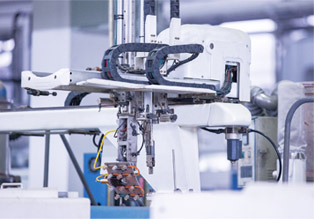
Assemblage and automation;
Electroplating technology, including continuous electroplating, rolling plating, hanging plating, etc.;
Inspection and testing technology. Connectors are gradually miniaturized, PITCH and SMT, so how to effectively detect the connectors becomes a big challenge; In terms of the test, the current connector testing standards mainly include EIA364 (Electronic Industries Association of America) and MIL-STD1344A(MIL-STD American Military Standard).

Sunkye Connection Technologies provides a wide product portfolio with a complete interconnect solutions offering. Sunkye connectors and cables assemblies are complementary with Sunkye backshells and conduits.
Feb 07, 2020
The Rapidly Growing Market For Medical Connectors
Nov 03, 2020
The Guide for Selecting Electrical Connectors
Jan 16, 2020
Brief Introduction Of Strip Connector
Sep 06, 2019
Polytetrafluoroethylene-PTFE
Jul 21, 2020
What is a Military Specification Circular Connector?
Nov 24, 2019
The Connector Applications Are Everywhere
Sep 13, 2020
Fusion of Connectors and Sensors
Aug 15, 2023
Extreme Conditions Bring up Hermetic Connectors
Jan 04, 2023
Four Connection Methods of Circular Connectors
Jan 07, 2020
The Performance Of Automobile Connector
Jan 28, 2020
The Connector Industry Is Booming
Jun 18, 2020
Application of Military Electrical Connectors (1)
Nov 04, 2019
How Military Connectors Work
Jul 06, 2020
Manual Assembly of Connectors (2)
Aug 09, 2021
What Are High Density Connectors?
May 31, 2019
Sunkye Will Postpone the Release of USB 3.1 Type C
Feb 15, 2021
The Power Capacity of RF Coaxial Connectors
May 31, 2019
TWIST PIN: THE LIGHTSPOT OF SUNKYE
Nov 17, 2022
Robotic Arm Works 7*24 in Manufacturing
Apr 07, 2020
Market Status of Miniature Connectors
May 31, 2019
SUNKYE will Release Type C Project on October
Nov 10, 2020
Applications and Characteristics of BNC Connectors
May 31, 2019
Sunkye at Expo Electronica 2014, Moscow
Jun 06, 2019
Alloy 52 UNS N14052 Material Report
Oct 06, 2020
Description of Pogo Pin Connectors
Feb 08, 2021
Four Attention Points in Using Power Connectors
Nov 06, 2019
Connector Classification
Sep 19, 2020
The Necessity of Waterproof Connectors
Jul 18, 2020
The Basic Structure of the Connector
Nov 03, 2019
Some Solutions For Poor Terminal Pressing
Dec 26, 2019
How To Classify Industrial Connectors
Nov 17, 2023
Future Development Trends of Circular Connectors
Nov 23, 2022
Hermetic Connectors for Implantable Medical Devices
Nov 02, 2021
MEET SUNKYE AT SAHA EXPO 2021 FAIR!
May 13, 2020
Reliability of Aerospace Electrical Connectors (2)
Mar 08, 2020
Sunkye: Safety, Innovation, Reliability
Sep 14, 2019
Miniaturization Trend of Mil Connectors
Dec 05, 2019
Disassembly Tools For Automotive Connectors
Feb 10, 2020
The Function And Prospect Of Medical Connector
Jan 25, 2020
Four Types Of Industrial Electrical Connectors
Nov 09, 2019
Introduction To Connector Knowledge
Aug 01, 2022
Connectors Make Sensors Work Well on Equipment
Dec 18, 2025
How to Survive During the Low Earth Orbit (LEO)?
Jan 19, 2020
Brief Introduction Of Flat Cable Connector
Dec 23, 2019
Technical Principles Of Connectors
Dec 22, 2024
Specialty Gas Connectors for Niche Applications
Nov 01, 2021
Meet Sunkye at SEDEC 2020 Fair!
Oct 06, 2019
How Military Spec Connectors Work
May 31, 2019
Sunkye Super Pin Connector
Aug 03, 2019
Connector D Type
Apr 13, 2020
Why is a Poor Connector Prone to Fire?
Jul 17, 2024
MEET SUNKYE AT ONS 2024
Apr 04, 2020
The Material of the Connector
Oct 30, 2019
D Sub Connector Introduction
Jun 12, 2020
7 Tips for Connector Design (1)
Jun 15, 2020
7 Tips for Connector Design (2)
Feb 13, 2020
Connection Between Brain And Machine
Oct 18, 2022
Hermetic Connectors for Implantable Medical Devices
Jul 15, 2020
Classification of Connectors
May 10, 2020
Reliability of Aerospace Electrical Connectors (1)
Sep 25, 2020
Related Knowledge of SMA RF Connector
Jan 22, 2020
Differences Between Connector And Terminal
Dec 14, 2019
Naming Of Connectors
Aug 09, 2019
Development of Micro Connector
Dec 01, 2020
How to Improve the Reliability of RF Connectors
May 27, 2021
The Importance of Connectors in Electrical Equipment
Dec 17, 2019
Interconnection Level Of Connector
Nov 29, 2019
Importance Of Connectors
Nov 12, 2019
Production Technology of Connector
Oct 31, 2019
The Introduction Of SMT
May 31, 2019
Everything You Need to Know: Type C
Nov 17, 2020
Selection Factors for SMA Connectors
Oct 20, 2020
The Failure Mechanism of Connectors
Oct 07, 2020
How to Distinguish FFC Connector and FPC Connector
Nov 10, 2020
The Manufacturing Process of Electronic Connectors
Oct 10, 2019
Types and Advantages of D-sub Connectors
Jan 03, 2024
Connector — A Big Player in Your Supply Chain
Oct 19, 2021
Subsea Connector needs a new revolution
Jul 03, 2020
Manual Assembly of Connectors (1)
Jan 01, 2020
Development Trend Of Automobile Connector In China
May 04, 2020
Automotive Connectors
Jan 25, 2021
The Analysis of Connector Electroplating Problems
Sep 08, 2019
What are Avionics Connectors?
Oct 13, 2023
Several Design Ideas for Electronic Connectors
Apr 25, 2020
The Second Generation Circular Military Connector
Oct 13, 2020
Selection Factors of RF Connectors
Sep 26, 2019
Market Status of Micro Miniature Connectors
Jul 30, 2019
Market Status of Micro Connectors
Jan 13, 2020
Overall Performance Parameters Of Connector
Jul 17, 2020
Sunkye Market Matrix
Oct 25, 2024
Harnessing Wind Energy: Sustainable Power Solutions
Feb 25, 2020
How to Choose the Right Medical Connector
Jan 11, 2021
How to Select Connectors for Hardware Design
Dec 22, 2020
The Transient Interruption Detection of Connectors
Jun 24, 2020
Application of Military Electrical Connectors (3)
Apr 22, 2020
Production Process of Connector Contacts
Nov 14, 2019
How To Choose The Right Connector
Jun 01, 2021
Functions and Advantages of Electrical Connectors
Jan 18, 2021
Knowledge of FPC Connectors
Jun 21, 2020
Application of Military Electrical Connectors (2)
Sep 12, 2019
Reliable Connectors Are the Secret of UAV Success
Dec 08, 2019
Connection Methods Of The Connector
Dec 08, 2020
Some Knowledge about RJ45 Connector
Feb 19, 2020
Reliability of Aerospace Electrical Connectors
Jul 12, 2020
Introduction to the Connector
Sep 04, 2019
Market Profile of Micro PCB Connectors
Dec 11, 2019
The Main Classification Of Crimp Connection
Sep 21, 2021
Connection Mode and Purchase of Aerospace Connector
Apr 01, 2020
Connectors for Special Applications
Sep 28, 2019
Development Trend of Miniature Connectors Technology
Jul 08, 2021
Structural Analysis of Aerospace Connector
Aug 07, 2019
A Revolution in Connector Technology
Nov 15, 2019
How To Make High-Quality Connector
Sep 24, 2019
Notes for Welding D Type Connector
Jan 31, 2020
The Development Of D-sub Connectors
Jul 09, 2020
The Importance of Connectors in Medical Equipment
Oct 02, 2023
MEET SUNKYE AT ADIPEC 2023 FAIR
Aug 02, 2020
Electrical Performance of Connector
Mar 20, 2020
Connector Quality Test Type
Sep 18, 2019
Definition of Mil Standard Connector
Nov 01, 2019
Five Common Features of USB Connector
Sep 02, 2019
Four Processes of Producing Connectors
Nov 08, 2019
Miniaturization Development Technology Of Connector
May 31, 2019
Sunkye Type C 10Gbps Test on April
Dec 29, 2019
Material Of Automotive Connectors
Sep 28, 2021
Correct Use and Safety of Avionics Connectors
Nov 11, 2019
Brief Introduction Of Automobile Connector
Jun 25, 2019
Sunkye Super Pin Datasheet
Oct 01, 2020
Structure and Material of Waterproof Connector
Oct 13, 2020
Various Coaxial Connectors
Mar 29, 2020
Demand for Heavy Truck Connectors Increases
Apr 28, 2020
How to Detect Medical Connectors
Aug 02, 2021
Introduction to Vehicle Connectors
Nov 05, 2019
Wearable Connectors Tend to be Miniaturization
Nov 10, 2019
The Future Trend Of Automobile Connector
Sep 08, 2022
How Does Environment Temperature Affect Connectors?
May 31, 2019
Features of Type C
Jun 27, 2020
Crimping and Welding of Military Connectors
Sep 20, 2019
Strictness of Military/Aerospace Specifications
Aug 19, 2024
Can a Connector Withstand Temperatures Up to 500°C?
Dec 01, 2021
Connectors' Revolution of 1000km off The Earth
Dec 02, 2019
Basic Structural Member Of Connector
GET IN TOUCH
MIL-DTL-32139 Nano D Connectors
English
日本語
한국어
français
Deutsch
Español
italiano
русский
Türkçe
Svenska
Nederland