When ESP failures don’t come from the pump, focus on electrical interface reliability.
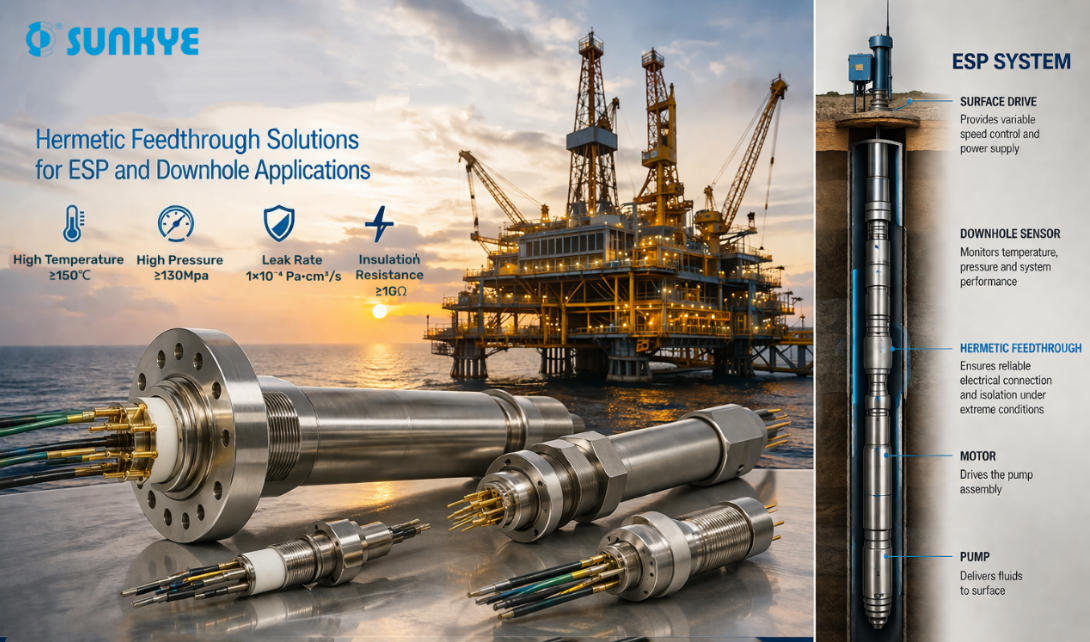
In ESP operations, most attention is typically placed on pumps, motors, and system sizing. However, in some of SUNKYE’s projects, the failure did not originate from any of these core components. It came from a much smaller point —the electrical interface between a downhole sensor and the external system. exposed to harsh downhole environments.
The ESP system was operating under typical conditions:
· High Temperature: ≥150°C
· High-pressure environment: ≥130MPa
· Continuous operations
After several months, the system began to show:
· Unstable sensor signals
· Gradual insulation resistance drops
· Intermittent shutdowns
Eventually, the ESP had to be pulled for inspection. the issue is not with the sensor or the main ESP components themselves, but with how the electrical interface is sealed and isolated from the environment. Sealing methods based on epoxy or similar materials may perform adequately in the short term, but under prolonged exposure to elevated temperature, pressure, and chemically aggressive fluids, their reliability can become limited. Small imperfections or material degradation over time can initiate the failure mechanism. This led to Insulation degradation, Signal distortion, System instability
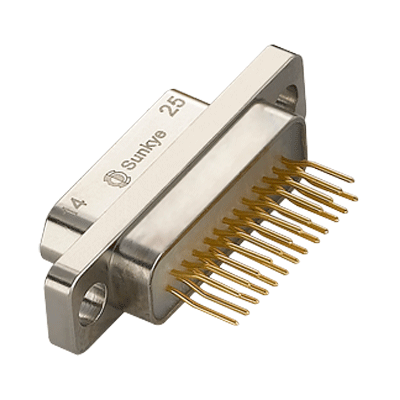
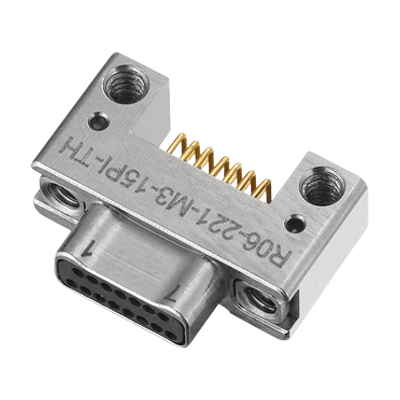
A more robust approach focuses on improving the sealing structure at the electrical interface level rather than redesigning the entire ESP system. Hermetic solutions based on glass-to-metal sealing provide a fundamentally different barrier, offering gas-tight and liquid-tight isolation. With controlled leakage rates verified through helium testing and stable insulation resistance under HPHT conditions. After implementing the improved sealing design, signal stability was restored, no further insulation drop was observed, and system run life significantly improved.
At SUNKYE, similar failure mechanisms are frequently observed across ESP and downhole sensing applications. The recurring pattern suggests that long-term system reliability is often governed not by the primary equipment, but by the integrity of electrical interfaces operating under continuous environmental stress. In many oil & gas applications, especially ESP and downhole sensing systems, the challenge is not only about electrical connection but about maintaining that connection reliably under extreme conditions over time.
In complex systems like ESP, failure is often attributed to major components. But in reality, long-term reliability is often determined by the smallest and most overlooked interfaces. Curious to hear from engineers working in ESP or downhole environments: Have you experienced similar issues related to electrical sealing or insulation?

 English
  日本語
日本語  한국어
한국어  français
  Deutsch
  Español
  italiano
  русский
  Türkçe
  Svenska
  Nederland
  فارسی
فارسی فارسی
فارسی