Insulation Resistance Is a System Property
In qualification testing for high-reliability aerospace and industrial connectors, MIL-DTL-83513 specifies a minimum insulation resistance (IR) requirement of 5,000 MΩ. However, under controlled laboratory conditions at room temperature and low humidity, insulation resistance measurements in the hundreds of GΩ—or even the TΩ range—are not uncommon, often raising questions about the validity and interpretation of such results. This article examines connector insulation resistance from the perspective of the complete insulation system, discussing how intrinsic material resistivity, leakage path geometry, interface integrity, and environmental conditions collectively influence the measured insulation resistance. It further explains why modern Micro-D connectors can exhibit insulation resistance values that are significantly higher than the minimum requirement specified by MIL-DTL-83513.
The insulation resistance of a connector is determined by more than the intrinsic resistivity of its insulating materials. In practical applications, leakage current may propagate through bulk dielectric materials, along exposed surfaces, across material interfaces, or through moisture-induced conductive films. Consequently, the measured insulation resistance of a finished connector is governed by a combination of material properties, leakage path length, effective conduction area, interface integrity, and environmental conditions.
For this reason, insulation resistance is fundamentally a system property rather than a material property. The measured insulation resistance of a finished connector reflects the performance of the entire insulation system rather than the intrinsic resistivity of a single material.
Volume resistivity describes the intrinsic electrical resistance of a material specimen under standardized laboratory conditions. A finished connector, however, is not a homogeneous block of insulating material. Instead, it is an assembly consisting of metallic contacts, insulating inserts, plated surfaces, potting compounds, wire insulation, air gaps, and multiple material interfaces.
Electrical leakage current does not simply travel through the bulk insulating material. Instead, it always seeks the path with the lowest overall impedance.
Depending on the connector design and environmental conditions, the leakage current may flow through the bulk dielectric, along the surface of the insulator, across microscopic contamination films, through moisture absorbed on exposed surfaces, or even along the interfaces between different materials.
Therefore, the measured insulation resistance should be regarded as the combined response of all possible leakage mechanisms rather than the resistance of a single insulating component.
Material selection remains one of the most important factors in connector design because it establishes the upper limit of achievable insulation performance.
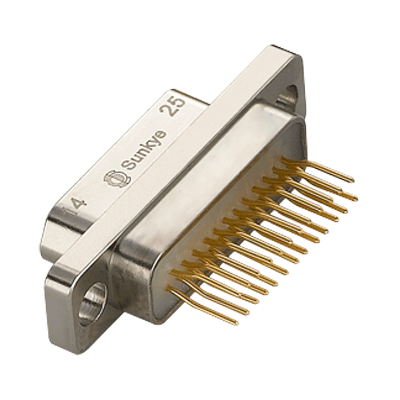
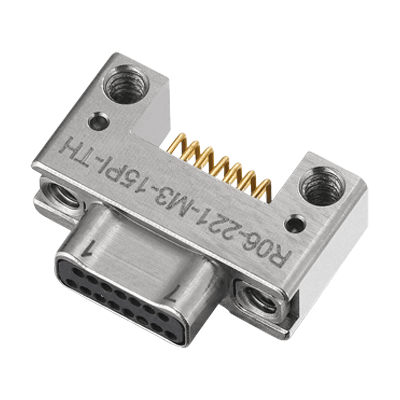
Sunkye’s MIL-DTL-83513 Micro-D connectors commonly employ glass-filled LCP as the primary insulating insert due to its excellent dimensional stability, low moisture absorption, and high volume resistivity. Crimped wire assemblies frequently utilize PTFE insulation, which provides outstanding dielectric strength and maintains excellent electrical properties over a wide temperature range. Potting compounds further improve environmental sealing by reducing moisture ingress and eliminating internal air cavities that could otherwise become leakage channels.
These materials create an excellent foundation for achieving high insulation resistance.
However, high-performance materials alone cannot guarantee a high insulation resistance measurement.
If one connector contains microscopic flux residue, fingerprints, absorbed moisture, or poorly controlled potting interfaces, its dominant leakage current may bypass the bulk insulating material entirely and instead travel across the contaminated surface. Under these conditions, the measured insulation resistance can decrease by several orders of magnitude, despite the insulating material itself remaining unchanged.
Conversely, when the connector maintains clean surfaces, well-controlled interfaces, properly cured potting materials, and stable environmental conditions, leakage through these alternative paths is greatly reduced. The measured insulation resistance then approaches the intrinsic capability established by the insulating material system.
This is why insulation resistance should never be interpreted solely as a material specification. It is a comprehensive reflection of the connector's entire electrical insulation system, including design, manufacturing quality, assembly cleanliness, and environmental control.

 English
 日本語
 한국어
 français
 Deutsch
 Español
 italiano
 русский
 Türkçe
 Svenska
 Nederland
 فارسی
 فارسی